How To Recognize Molecular Compounds
Only compounds with 2 6 10 14. Typically non-metals tend to share electrons make covalent bonds and thus form molecular compounds.

Elements Atoms Molecules Ions Ionic And Molecular Compounds Cations Vs Anions Chemistry Youtube Compounds Science Chemistry Classroom Chemistry Lessons
Therefore it is most likely an ionic compound.

How to recognize molecular compounds. There are two ways to recognize ionic compounds. Describe the differences among strong electrolytes weak electrolytes and nonelectrolytes. Simply put organic chemistry is like building with molecular Legos.
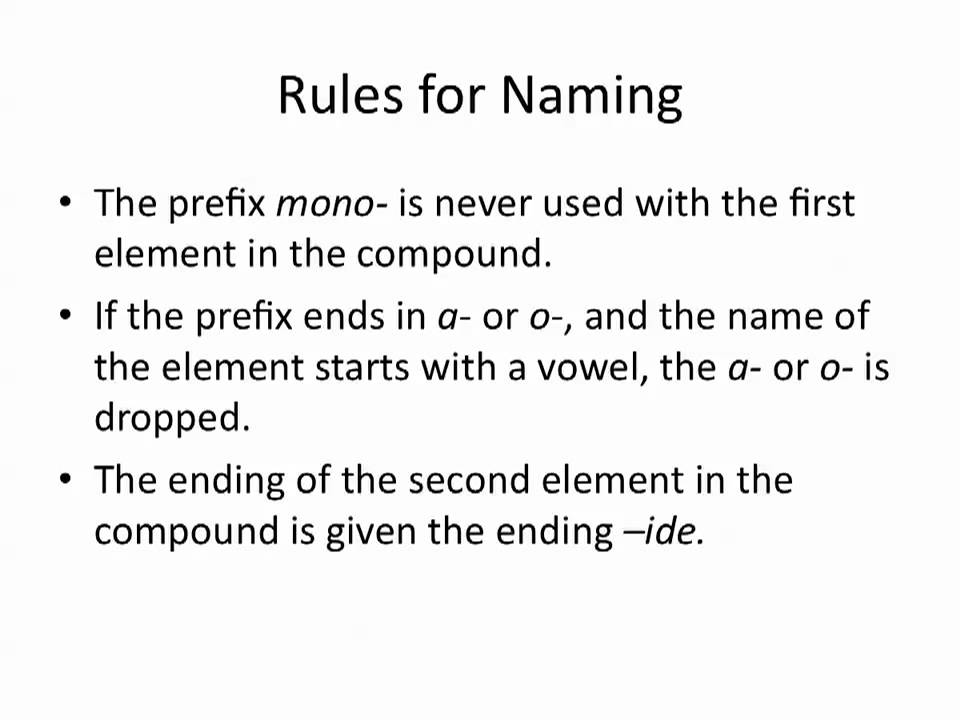
If the prefix of the first element would be mono- it is not neededTIP. Adaptive immune responses however are slow to develop on first exposure to a new. Hydrogen is the lightest element.
This eliminates answers B and C. A new class of cancer drugs called radiopharmaceuticals deliver radiation therapy directly and specifically to cancer cells. The last several years have seen an explosion of studies on radiopharmaceuticals and researchers are hopeful they can be effective new treatments with fewer side effects than standard radiation.
The following table lists the IUPAC names assigned to simple continuous-chain alkanes from C-1 to C-10. Simply put aliphatic compounds are compounds that do not incorporate any aromatic rings in their molecular structure. The calculator handles at most two different bracket levels.
The cation is always given first in a name followed by the anion. First compounds between metal and nonmetal elements are usually ionic. Key Takeaways Key Points.
A molecular descriptor is a structural or physicochemical property of a molecule or part of a molecule. Video 3 Naming Branched Chain Alkanes. The molecular mass calculator will recognize the entered formulas which are included in the list of organic compounds.
Including examples of straight chain alkanes presented in condensed molecular formula structural formula and line or skeletal structure. Typically non-metals tend to share electrons make covalent bonds and thus form molecular compounds. In organic chemistry we will learn about the reactions chemists use to synthesize crazy carbon based structures as well as the analytical methods to characterize them.
PCl 3 - phosphorus trichloride CH 3 CH 2 OH - ethanol O 3 - ozone H 2. Compound A has 6 pi electrons compound B has 4 and compound C has 8. Molecular compounds are made when two or more elements share electrons in a covalent bond to connect the elements.
For example CaBr 2 contains a metallic element calcium a group 2 or 2A metal and a nonmetallic element bromine a group 17 or 7A nonmetal. We will also think about how those reactions are occurring on a molecular level with reaction mechanisms. Get used to what part of an elements.
Hydrogen is the chemical element with the symbol H and atomic number 1. Our ability to avoid infection depends in part on the adaptive immune system discussed in Chapter 24 which remembers previous encounters with specific pathogens and destroys them when they attack again. A QSAR model for predictive toxicology is a mathematical relationship between a chemicals quantitative molecular descriptors and its toxicological endpoint 944Molecular descriptors derived from atomic or molecular properties that translate physicochemical topological and surface.
Steps to Naming Covalent Compounds. You need to recognize the ions in an ionic compound. Full discussions of the topics covered by these problems are available in the Virtual Textbook of Organic Chemistry.
At standard conditions hydrogen is a gas of diatomic molecules having the formula H 2It is colorless odorless non-toxic and highly combustibleHydrogen is the most abundant chemical substance in the universe constituting roughly 75 of all normal matter. Organic compounds such as carbohydrates lipids proteins and nucleic acids are all examples of molecular compounds. Pi electrons can be considered aromatic.
A common model for the treatment of conjugated molecules is a composite valence bond Hückel molecular orbital theory VBHMOT treatment in which the σ framework of the molecule is separated from the π system or systems of the molecule see the article on the sigma-pi and equivalent-orbital models for this model and an alternative treatment. The only aromatic compound is answer choice A which you should recognize as benzene. You can recognize these compounds because they consist of nonmetals bonded to each other.
So you know the first part will always have a positive charge and the second part will have a negative charge. Second look at the subscript of each element to determine which prefix to use. The following button will activate a random display of problems concerning the reactivity of common functional groups.
The complexity starts when we add a branch or carbon substituent. Recognizing Ionic Compounds. The Difference Between.
The alkanes and cycloalkanes are also members of a larger class of compounds referred to as aliphatic. Answer D is not cyclic and therefore cannot be aromatic. Make sure you enter the molecule of crystallization at last eg.
This video teaches you how to namerecognize a simple or straight-chain alkane. Rules for Naming Molecular Compounds. Describe how an aqueous solution is formed from both ionic compounds and molecular compounds.
Recognize that some compounds are insoluble in water. The name gives you this information. Recognize when it is appropriate to use a common chemical name.
If an element does not have a prefix assume that the subscript is 1 Third apply the above naming scheme. Remove the ending of the second element and add ide just like in ionic compounds. Molecular compounds are made when two or more elements share electrons in a covalent bond to connect the elements.
Covalent compounds also are known as molecular compounds. Nomenclature for Covalent or Molecular Compounds. Humans are exposed to millions of potential pathogens daily through contact ingestion and inhalation.
First identify the elements present.

Subscripts Vs Coefficients 8th Grade Science 7th Grade Science Science Classroom

Molecules Spacefilledmodels Space Filled Models Are Useful Because They Show The Elements Relative Size And It Give A C Science Education Molecules Molecular

Difference Between Empirical And Molecular Formula Infographic Chemistry Basics Chemistry Study Guide Chemistry Education

Pin On Geometry Of Molecules
Naming Binary Molecular Compounds Chemistry Tutorial Chemistry Molecular Physical Science

Chemistry Lesson Identifying Ionic Vs Molecular Compounds Chemistry Lessons Chemistry Worksheets Chemistry

Elements Compounds Ionic Molecular Pure Substances Can Be Divided Into Elements And Compounds Compounds Are Molecular Pure Products Examples Of Mixtures

Difference Between Ionic And Molecular Compounds Infographic Chemistry Lessons Chemistry Classroom Study Chemistry

Elements Compounds Ionic Molecular Pure Substances Can Be Divided Into Elements And Compounds Compounds Are Molecular Pure Products Examples Of Mixtures

Namingcompounds Ions Compounds Group I And Group Ii Metals Only Have One Charge And They Are Named By Identifying The Cation And Names Fluoride Positivity

Meso Compounds Do Not Have Enantiomers Chemistry Lessons Teaching Chemistry Chemistry

Ion Formation Ionic Compound Molecular Chemical Bond

Related Image Prefixes School Help Chemistry

Elements Atoms Molecules Ions Ionic And Molecular Compounds Cations Vs Anions Chemistry Youtube Atoms And Molecules For Kids Molecules Chemistry

Chemical Bonding Cheat Sheet How To Name Ionic And Covalent Bonds Teaching Chemistry Chemistry Lessons Chemistry Classroom

2 6 Molecules And Molecular Compounds Atom Diagram Chemistry Textbook Molecular

Difference Between Element Molecule And Compound Definition Periodic Table Types Relationship And Diff In 2021 Chemistry Education Biology Facts Teaching Chemistry

Compounds Molecules Compounds Form From Elements On The Periodic Table Covalent Bonding Ionic Bonding Molecules
3 3 Representing Compounds Chemical Formulas And Molecular Models Chemistry Molecular School Resources